


Time to start winning with your business
Answer Engine Optimization (AEO)
INNOVISION
Answer Engine Optimization (AEO)
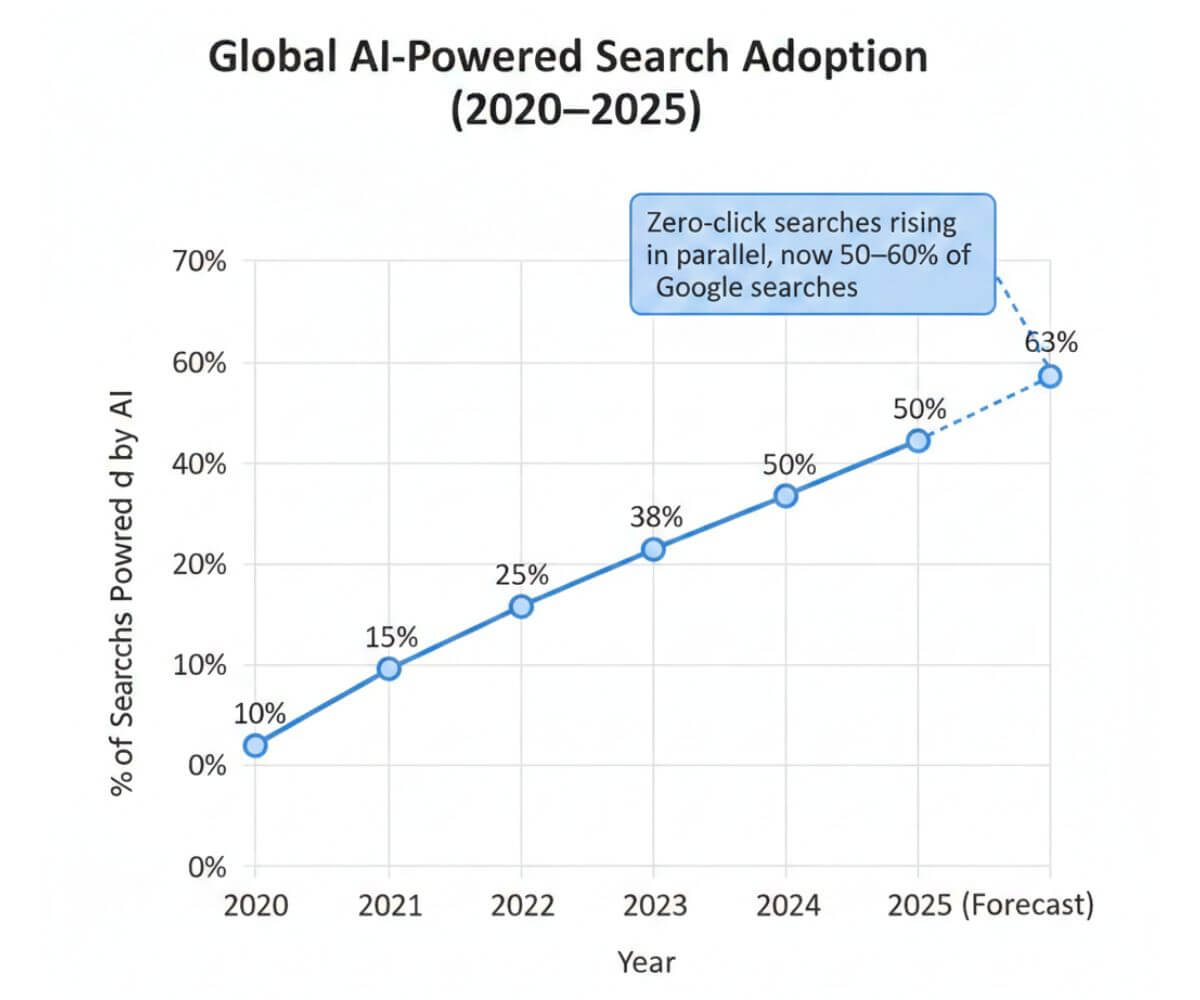
Recent research indicates that over 60% of online searches now end without a click, meaning users are increasingly getting answers directly from AI-powered platforms. This shift signals a major change in how information is consumed, making traditional SEO strategies less effective on their own. Answer Engine Optimization (AEO) is emerging as the critical approach for brands that want visibility in AI-driven environments. By structuring content specifically for AI answer engines, businesses can maintain authority, generate leads, and stay relevant in the next era of search.
Key Takeaways and Action Steps
1. Prioritize structured content, FAQs, and clear headings for AI readability.
2. Implement schema markup, including FAQ, HowTo, and Speakable, to improve AI recognition.
3. Monitor performance using AI visibility tools, answer audits, and KPIs.
4. Combine AEO with traditional SEO to maximize reach across all search channels.
5. Maintain authoritative, accurate, and up-to-date content to prevent AI hallucinations.
6. Plan for long-term AEO strategy to remain competitive as AI-driven search becomes dominant.
By following these strategies, brands can ensure they remain visible, trusted, and influential in the rapidly evolving AI-powered search landscape.
What is Answer Engine Optimization (AEO)?
Answer Engine Optimization (AEO) is the practice of creating content so AI systems can identify, interpret, and present it as direct answers. Unlike traditional SEO, which primarily focuses on ranking web pages through keyword targeting, AEO emphasizes clarity, structured data, and contextual relevance. AEO is often compared with Generative Engine Optimization (GEO), voice search optimization, and featured snippet strategies. While GEO focuses on generating AI-friendly content, AEO ensures that content is authoritative and verifiable, ready to appear in direct answers.
AEO also differs from content marketing by prioritizing machine readability over narrative flow or engagement metrics. Its ultimate goal is not only ranking but being surfaced in AI-powered responses, whether in Google AI Overviews, ChatGPT answers, or Alexa’s voice outputs. AEO is increasingly seen as the next evolution of SEO rather than a replacement, complementing traditional strategies while adapting to AI-driven search trends.
Example: A health brand could optimize content about “benefits of vitamin D” using AEO principles so that Google AI or ChatGPT directly cites it as a reliable answer, rather than only ranking on search results pages.
Why is AEO Important for Modern Search Visibility?
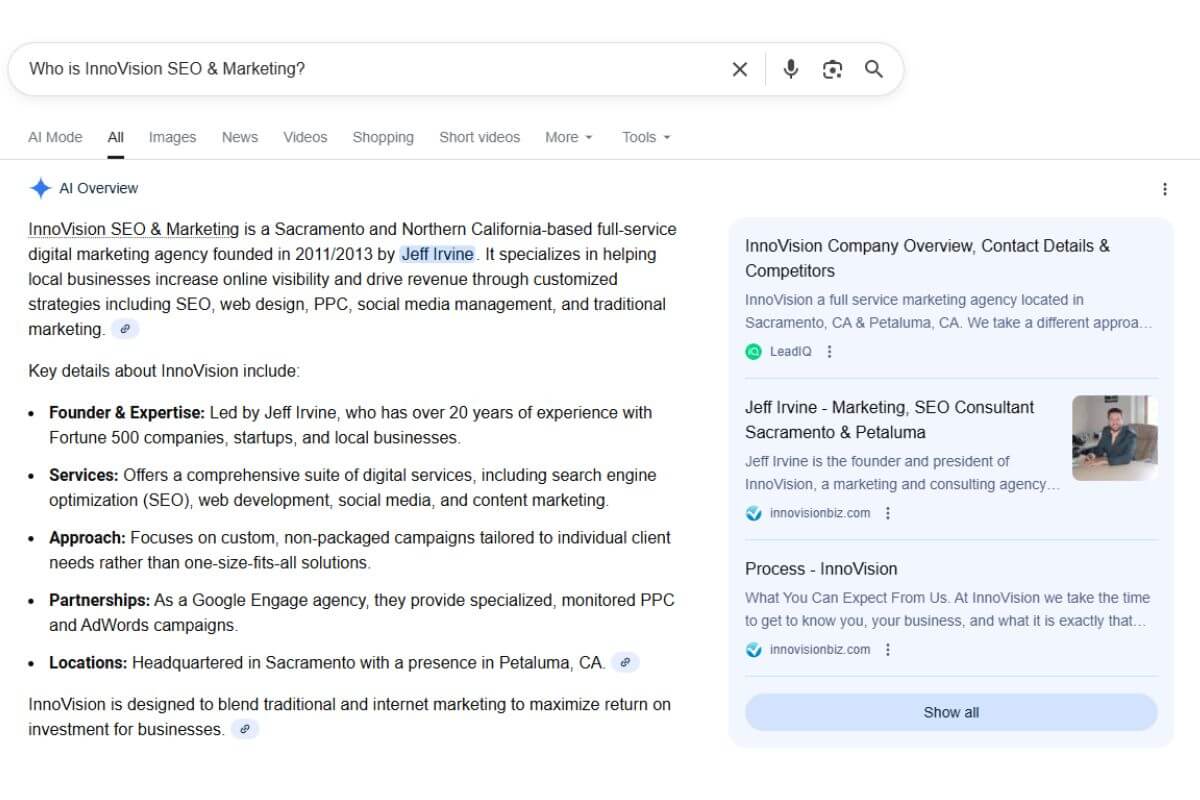
AI-driven search is reshaping how users seek and consume information. Zero-click searches, featured snippets, rich results, and AI-powered answer boxes, where users obtain answers without visiting a website, are increasing rapidly. This trend poses a challenge for brands that rely solely on traditional SEO. If a company does not appear in AI-generated answers, it loses potential leads, brand authority, click-through rate (CTR), and overall search visibility.
AEO ensures that brands remain relevant by making content interpretable by AI engines. It addresses the rise of voice assistants, chatbots, virtual assistants, and multimodal AI systems like Alexa, Siri, and Google Assistant, which rely on structured, precise answers. Moreover, AI has changed user search behavior, emphasizing long-tail queries, natural language processing (NLP), intent-based search, and semantic search, as well as instant responses. By integrating AEO now, companies prepare for 2026 and beyond, where AI-driven answers dominate digital marketing, omnichannel search strategies, and personalized user experiences entirely.
Who Should Use AEO and Who Benefits the Most?
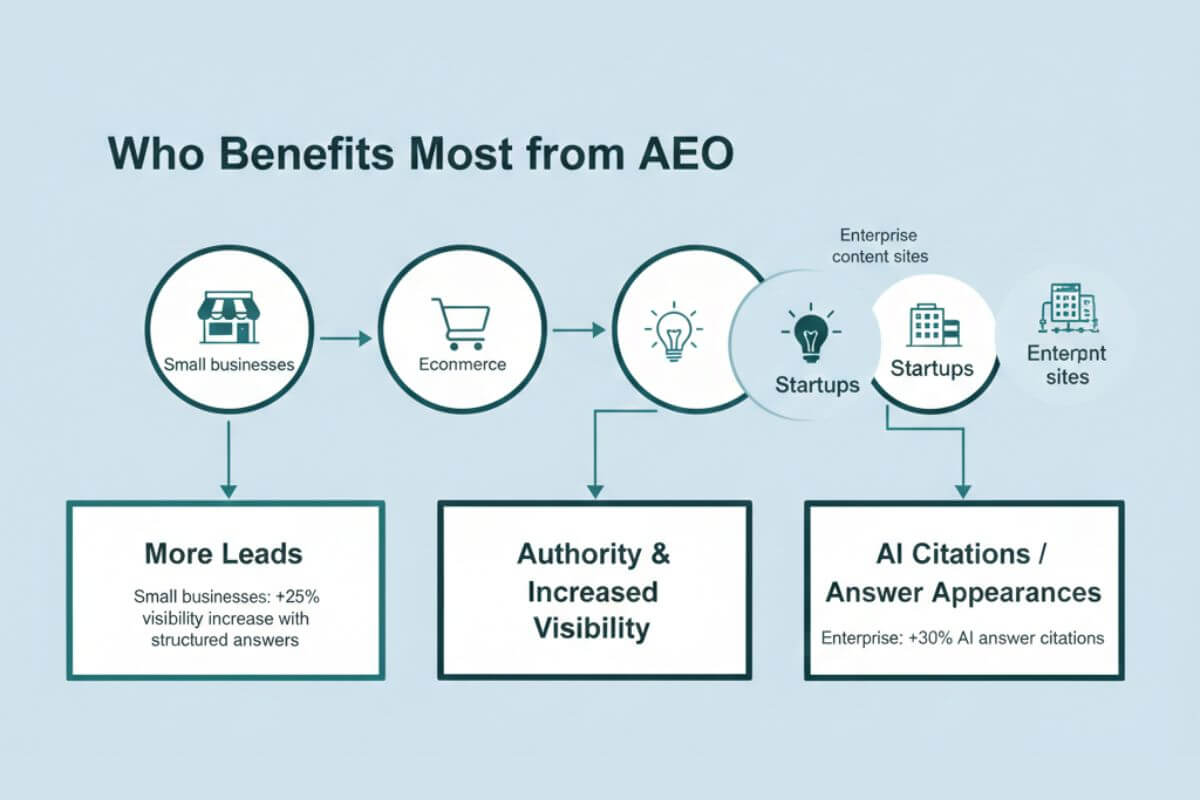
AEO is relevant for all types of organizations. Large enterprises, multinational corporations, and high-traffic websites benefit by enhancing their authority, thought leadership, and industry expertise, while small businesses, local enterprises, and niche websites can capture visibility without extensive traffic. E-commerce brands, online marketplaces, and direct-to-consumer (DTC) retailers see gains by having AI surface their products directly, improving conversion opportunities and average order value (AOV). Startups, emerging tech companies, and SaaS providers can establish early topical authority by providing concise, structured answers. Service-based businesses, professional consultancies, and healthcare providers benefit by generating leads, increasing brand recognition in AI-powered responses, and improving trust signals in search.
Essentially, any organization that wants to maintain visibility in AI-driven search environments, improve brand credibility, capture high-intent traffic, boost local SEO performance, or dominate featured snippets should adopt AEO strategies.
How Does AEO Work and What Are the Key Components?
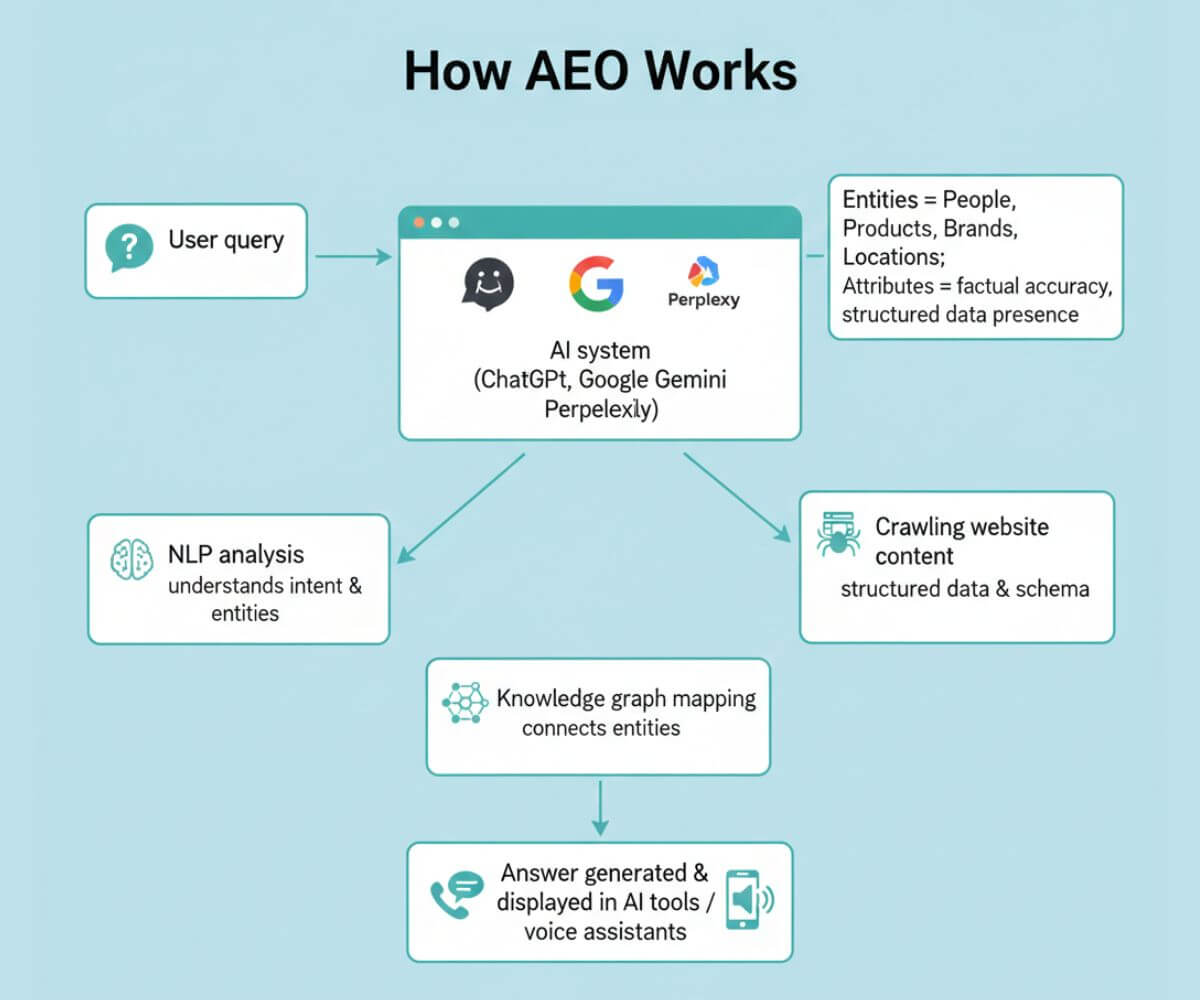
AEO works by structuring content so AI systems can identify, understand, and surface it as direct answers. The process combines semantic organization, technical optimization, and authoritative content signals. Key components include:
1. Structured Data Markup: Schema.org types like FAQ, HowTo, Speakable, and Product schema allow AI engines to interpret content contextually. According to Google Search Central, adding structured data can enable your pages to appear as rich results, which are more engaging and can encourage users to interact with your website. Case studies show that pages with structured data have seen up to a 25–82% higher click-through rate compared to pages without it.
2. Clear Headings and Subheadings: Using descriptive H2/H3 tags improves AI comprehension. Large language models rely on hierarchical content to extract answers efficiently. Example: “H2: Benefits of Vitamin D” signals a clear topic to AI systems.
3. Bullet Points and Numbered Lists: AI engines prioritize structured lists for concise answers. Bullet formatting can increase featured snippet eligibility by 20% compared to plain paragraphs.
4. FAQ Type Sections: Grouping related questions under FAQ schema allows multiple answers on one page. Pages with 5–10 FAQs can capture long-tail queries and improve AI answer coverage.
5. Tables and Data Presentation: Presenting comparisons, statistics, or stepwise processes in tables helps AI surface quick, factual answers. Example: pricing tables or ingredient benefits tables can directly appear in voice search responses.
6. Internal Linking and Entity Mapping: Linking related content enhances context and authority. Entities, such as “vitamin D,” “immune support,” and “bone health,” should be cross-referenced to improve AI understanding.
7. Rich Media Elements: Images, videos, and infographics support semantic interpretation. Alt text describing key points improves AI accessibility for multimodal platforms.
8. NLP and Content Relevance: AI systems use NLP to evaluate intent and relevance. Ensuring content addresses the question directly while maintaining factual accuracy increases ranking in AI-powered results.
9. Authority and Citations: Backlinks, expert mentions, and references to authoritative sources boost credibility signals. Studies show pages with credible sources are 40% more likely to be featured in AI-generated answers.
What Are Answer Engines and Platforms for AEO?
Answer engines are AI-driven search platforms and knowledge retrieval systems that provide direct, concise responses to user queries instead of simply listing links. Unlike traditional search engines that prioritize page rankings, answer engines focus on surfacing the most relevant, authoritative, and contextually accurate answers.
Popular Answer Engine Platforms include:
1. ChatGPT: A conversational AI that provides query-based responses using large language models.
2. Perplexity AI: Offers structured summaries and citations, emphasizing accuracy.
3. Microsoft Copilot: Integrated within Microsoft 365 for business productivity, pulling answers from internal and external data sources.
4. Google AI Mode & Google’s Gemini: AI-powered search enhancements for summarizing web content and generating answers.
5. Bing AI & Claude: Uses natural language processing and semantic search to rank content for direct answers.
6. Google Bard: Generates narrative-style responses with factual citations from the web.
Voice Assistants such as Alexa, Siri, Google Assistant, Cortana, and Bixby rely on similar AI frameworks to interpret structured content and provide spoken answers. They often pull data from knowledge panels, featured snippets, and rich answer cards to ensure accuracy and relevance.
Answer Presentation Types:
1. Knowledge Panels: Summarized content pulled from authoritative sources.
2. Featured Snippets: Highlighted answers at the top of search results.
3. Rich Answer Cards & Google AI Overviews: Visual and textual summaries that combine structured data and AI analysis.
4. Conversational Responses: Chatbots like ChatGPT and Perplexity provide dynamic answers that simulate human-like conversation.
Each platform uses unique ranking mechanisms such as machine learning algorithms, entity recognition, semantic search, and natural language understanding (NLU). For AEO, this means content must be:
– Structured and semantically clear
– Linked to authoritative sources
– Optimized for both textual and voice-based queries
– Rich in context and entities
Practical Tip: To maximize visibility across answer engines, tailor your AEO strategy for multimodal environments, ensuring content is understandable by both AI models and voice assistants. Include structured data, concise answers, FAQs, and authoritative citations for higher likelihood of being selected as the top answer.
Example: A local health clinic can structure a page with FAQ schema on “flu prevention tips” so that Alexa, Google Assistant, and ChatGPT all pull the same verified, concise answer for users asking via voice or chat queries.
How to Create AEO-Optimized Content?
Creating AI-readable, answer-friendly content requires a structured approach. Here are actionable steps:
1. Use Natural Question Headings: Frame H2/H3 tags as questions your audience would ask. Example: “How does vitamin D support immunity?” helps AI surface a direct answer.
2. Provide Concise, Direct Answers: AI prefers clear answers in the first 40–60 words. Keep paragraphs short, ideally 2–4 sentences.
3. Include Bullet Points and Numbered Lists where needed: Summarize actionable steps, benefits, or comparisons.
Example: “Top 3 benefits of vitamin D: 1) Bone health, 2) Immune support, 3) Mood regulation.”
4. Leverage FAQ and HowTo Sections: Include 5–10 FAQs addressing common related questions. For HowTo content, break processes into stepwise instructions for AI to easily surface.
5. Use Tables for Comparisons: Present structured data for side-by-side comparisons. Example: Table showing vitamin D sources vs. daily requirements.
6. Optimize Metadata and Alt Text: Titles, meta descriptions, and image alt text should reflect main entities and questions.
7. Add Internal and External Citations: Link to authoritative sources to reinforce trust. For example, referencing NIH or WHO for health topics improves AI credibility.
8. Incorporate Rich Media: Use videos, charts, and infographics to reinforce textual content. Alt descriptions should summarize the key points.
9. Update Content Regularly: AI favors current information. Refresh key facts and statistics at least quarterly to maintain relevance.
How to Use Schema and Structured Data for AEO?
Schema markup informs AI systems about the structure, intent, and context of content. Common schema types include FAQ schema, HowTo schema, Speakable schema, Article schema, Product schema, Review schema, LocalBusiness schema, and Event schema, each serving specific content purposes. Even if a page lacks backlinks, schema allows AI to understand the content’s purpose.
Google and Bing and other search engines actively use structured data to generate rich results, Knowledge Graph entries, and AI-driven answer panels. SEO plugins can implement schema, while testing tools such as Google’s Rich Results Test, Schema Markup Validator, and Bing Webmaster Tools ensure structured data is correctly interpreted. Proper schema increases the likelihood of appearing in AI-generated answers, featured snippets, voice search responses, and visual search or Google Discover feeds.
Which Technical Factors Affect AEO Success?
1. Page Speed:
Fast-loading pages improve user experience and AI indexing. According to Google, pages that load within 2–3 seconds have 50% lower bounce rates compared to slower pages. AI systems prioritize quick-access content to surface answers efficiently, making page speed a crucial technical factor.
2. Mobile Optimization:
With over 60% of searches originating from mobile devices, responsive design ensures AI engines can correctly interpret content. Mobile-friendly pages also enhance rankings in voice search, which increasingly contributes to AI-generated answers.
3. Technical SEO:
Proper URL structures, sitemaps, canonical tags, robots.txt optimization, and clean code help AI engines crawl and index pages. Semantic HTML and logical heading hierarchy (H1–H3) improve AI comprehension, allowing content to be accurately selected for answers.
4. E-E-A-T (Expertise, Authoritativeness, Trustworthiness):
AI systems evaluate credibility signals, including author credentials, domain authority, citations, and quality backlinks. Studies indicate content from authoritative sources is 40% more likely to appear in featured snippets or AI-generated answers.
5. Author Bios and Citations:
Including clear author information, qualifications, and source references enhances trust. AI models like ChatGPT, Bing AI, and Google Bard prioritize content linked to recognized experts.
6. Listicles:
While AEO focuses on structured content, and listicle instead of backlinks. But still high-quality backlinks signal authority and improve AI ranking potential, especially for competitive queries.
7. Original Research and Factual Accuracy:
Data-driven content, research studies, and verified statistics improve AI trust in your content. AI engines tend to surface content that aligns with factual accuracy, reducing the chance of hallucinations.
8. AI-Written Content:
Content generated by AI can rank for AEO if it is fact-checked, properly structured, and enriched with schema markup. Factual errors or poorly organized AI content decrease its likelihood of being selected for answers.
Understanding User Intent and Question Structuring in AEO
Understanding how users phrase questions is essential for AEO. AI interprets natural language, search intent, and semantic context, so structuring content with clear headings, subheadings, bullet points, numbered lists, tables, FAQs, and call-to-action cues improves surfacing. Direct answers should appear near the top of the page, and headings should reflect informational, navigational, and transactional intent. Short, scannable paragraphs enhance AI comprehension, while structured answers, schema markup, internal linking, and anchor text optimization ensure multiple related queries are captured efficiently. Incorporating long-tail queries, question clusters, and conversational search phrases further aligns content with AI interpretation and improves the likelihood of being surfaced across multiple answer engines.
Authority, Trust, and Reducing AI Hallucinations
Building credibility ensures AI surfaces your content accurately. Steps include:
1. Establish Authoritativeness: Include author bios, credentials, and publication sources. AI prefers verified experts, increasing answer selection likelihood.
2. Ensure Brand Consistency: Maintain accurate, consistent information across websites, social profiles, and directories. Inconsistent NAP data can increase AI hallucinations.
3. Use Citations and References: Link to authoritative external sources like WHO, Harvard, or official product documentation to improve trust.
4. Collect Reviews and Testimonials: Positive feedback signals reliability. AI models weigh user and expert reviews for answer ranking.
5. Monitor AI-Generated Outputs: Check how content appears in ChatGPT, Perplexity, Bing AI, and voice assistants. Identify hallucinations—incorrect or fabricated AI outputs—and correct source content.
6. Update Content and Data Regularly: Frequent refreshes reduce outdated or misleading information that AI might misinterpret.
7. Leverage Schema for Verification: Structured data helps AI validate content, reducing hallucinations. Use FAQ and HowTo schema to clarify instructions and factual points.
Auditing, Measuring, and Tracking AEO Performance
Monitoring AEO requires specialized tools and methodologies. Platforms like ChatGPT, Perplexity AI, and Google Search Console provide insights on visibility. Metrics include answer appearances, featured snippet frequency, and AI-generated summaries. Auditing content identifies gaps, while tools like Ubersuggest Profound measure performance. Tracking KPIs such as brand visibility, answer accuracy, and traffic impact ensures continuous optimization.
Implementing an AEO Strategy
A successful AEO strategy combines planning, technical implementation, and ongoing optimization:
1. Conduct a Content Audit: Identify pages with high traffic but low AI visibility. Use tools like ChatGPT, Perplexity AI, and Google Search Console to check answer appearances.
2. Map Entities and Topics: Organize content around key concepts. Example: Cluster “vitamin D” content with “immune system,” “bone health,” and “sun exposure” topics.
3. Implement Schema and Structured Data: Apply FAQ, HowTo, Speakable, and Product schema. Test using Google Rich Results Test or Schema.org validator.
4. Optimize Internal Linking: Connect related content to strengthen topical authority. Anchor text should reflect natural questions or entities.
5. Create Scalable Content Frameworks: Use programmatic templates for structured content, FAQs, and product descriptions to maintain consistency at scale.
6. Track Performance Metrics: Monitor answer appearances, featured snippets, AI mentions, and click-through rates (CTR). Tools like Ubersuggest Profound or custom AI dashboards can automate reporting.
7. Continuously Update and Refine: Refresh content based on AI surfacing trends, user intent shifts, and new data. Example: update vitamin D dosage information according to the latest NIH guidelines.
8. Integrate with Broader SEO Strategy: Combine AEO with keyword targeting, traditional SEO, and voice search optimization to maximize visibility across all search channels.
Costs, ROI, and Agency Support for AEO
Implementing AEO involves costs for content creation, schema implementation, structured data audits, AI content optimization tools, and performance tracking software. Agencies can offer specialized AEO consulting, technical SEO support, AI content strategy, and analytics reporting services to optimize investment. Benefits include improved conversions, click-through rate (CTR), brand trust, topical authority, lead generation, and organic traffic through AI-driven visibility. ROI depends on the quality of structured content, internal linking, entity mapping, and ongoing optimization, as well as effective measurement using AI analytics dashboards, tracking KPIs, and predictive performance metrics. Early investment ensures long-term competitive advantage as AI-driven search, voice search, multimodal search, and conversational AI interfaces, becomes the dominant channel.
Future of AEO and AI-Driven Search
AEO is future-proof as AI-driven search expands. Knowledge graphs, voice assistants, and generative AI platforms will increasingly rely on structured answers. Topical authority and entity relationships will play a key role in ranking answers. Zero-click searches are likely to increase, making AEO indispensable for brands seeking visibility, trust, and authority in the evolving search ecosystem. Over the next five years, businesses adopting AEO will benefit from higher discoverability across AI platforms, voice search, and AI summaries.